
Central Oregon Building Lot Checklist: Before You Buy Land
Central Oregon Building Lot Checklist: Before You Buy Land
Central Oregon Building Lot Checklist: Before You Buy Land
Select Design & Build Published: October 7, 2026
A lot is ready for a custom home when four things line up: you can legally get permits on it, it can be served by water and wastewater, you can legally and physically reach it, and the home you want fits its zoning, terrain, and any community rules. In Central Oregon, the answers change depending on whether the parcel sits inside a city or out in unincorporated Deschutes County. Check each item below before your offer’s contingency period ends, not after closing.
Start with one question: city or county?
Almost every other answer depends on who has jurisdiction. A parcel inside Bend city limits goes through the City of Bend for land use and building permits, and it will usually connect to city sewer and a water provider. A rural parcel goes through Deschutes County Community Development, and it will often rely on a septic system and a private well. Redmond, Sisters, and La Pine each run their own planning departments.
The fastest first step is to look the parcel up in Deschutes County’s DIAL property information tool. You can see the zoning, the tax lot map, and the property’s permit history, including any earlier septic site evaluations listed under the Development tab.
Confirm it’s a legal lot of record
This one surprises buyers of rural land. A tax lot is not automatically a lot you can build on. Deschutes County requires rural owners to verify that a parcel is a legal lot of record, meaning it was lawfully created under the rules in effect at the time, before it will issue land use, building, or septic permits. Under amendments the county adopted in 2017, owners who have already received a county land use, building, or septic permit usually don’t need to go through verification again.
If the parcel has never been permitted and isn’t part of an approved subdivision or partition, ask the seller for lot of record documentation, or make verification a condition of the sale.
Wastewater: sewer or septic?
If public sewer isn’t available, the home needs an approved onsite wastewater (septic) system, and where that system can go often decides where the house can go.
In Deschutes County, a septic site evaluation comes first. It’s an investigation of the soil to determine whether the property can treat wastewater, what minimum system it needs, and where the initial and replacement dispersal areas must sit. The county requires the evaluation before it will issue septic or building permits, and applicants dig three to five test pits in the likely drainfield area so a specialist can study the soil profile. The county’s site evaluation research checklist explains the process and notes that the county generally relies on evaluations less than 15 years old, while still checking whether newer state rules apply.
Two local details worth knowing:
-
A prior approval is valuable, but check it. A previous site evaluation on record can save time and cost. Confirm it matches the parcel as it exists today and that the approved system type fits the home you plan to build.
-
Some city parcels still use septic. For properties inside Bend or Redmond city limits, the county’s site evaluation application guide requires a signed city authorization form, because the city first decides whether sewer is physically or legally available.
The system type matters for budget too. A standard gravity system and a pressure distribution or advanced treatment system are very different line items. Oregon’s rules for onsite systems are set by the Oregon Department of Environmental Quality, and some areas of the county, including parts of South Deschutes County, carry additional groundwater protection considerations.
Water: city, private utility, or well?
Inside Bend, “city water” isn’t a given. The City of Bend serves roughly three quarters of water customers within the urban growth boundary, and two private utilities, Avion Water and Roats Water, serve most of the rest under franchise agreements with the city. Ask the seller or the provider directly which utility serves the lot, whether a service connection exists, and what connection will require.
On rural land, the answer is usually a well. Oregon allows single or group domestic use of groundwater up to 15,000 gallons per day without a water right permit, along with watering up to a half acre of non-commercial lawn and garden, as outlined in the Oregon Water Resources Department’s exempt use guidance. The exemption is about legal use, not about whether water is there. To get a sense of what drilling might involve, search the OWRD well log database for neighboring parcels. Well depths and yields in the area tell you more than any listing description.
If the lot already has a well, ask for the well log, recent flow and water quality test results, and confirm the well sits a proper distance from where a septic system would go.
Access, easements, and power
A lot needs legal access and practical access. Legal access means a recorded right to reach the parcel, either frontage on a public road or a recorded easement. Practical access means a driveway route that a concrete truck, a well rig, and a fire engine can use in every season, including after a snowstorm.
Review the preliminary title report for easements, including utility easements that limit where you can build. Then confirm where the nearest power service is and ask the utility what extending it would involve. On acreage, the distance from the road to your building site affects the cost of the driveway, power, and water line all at once.
Terrain, rock, and slope
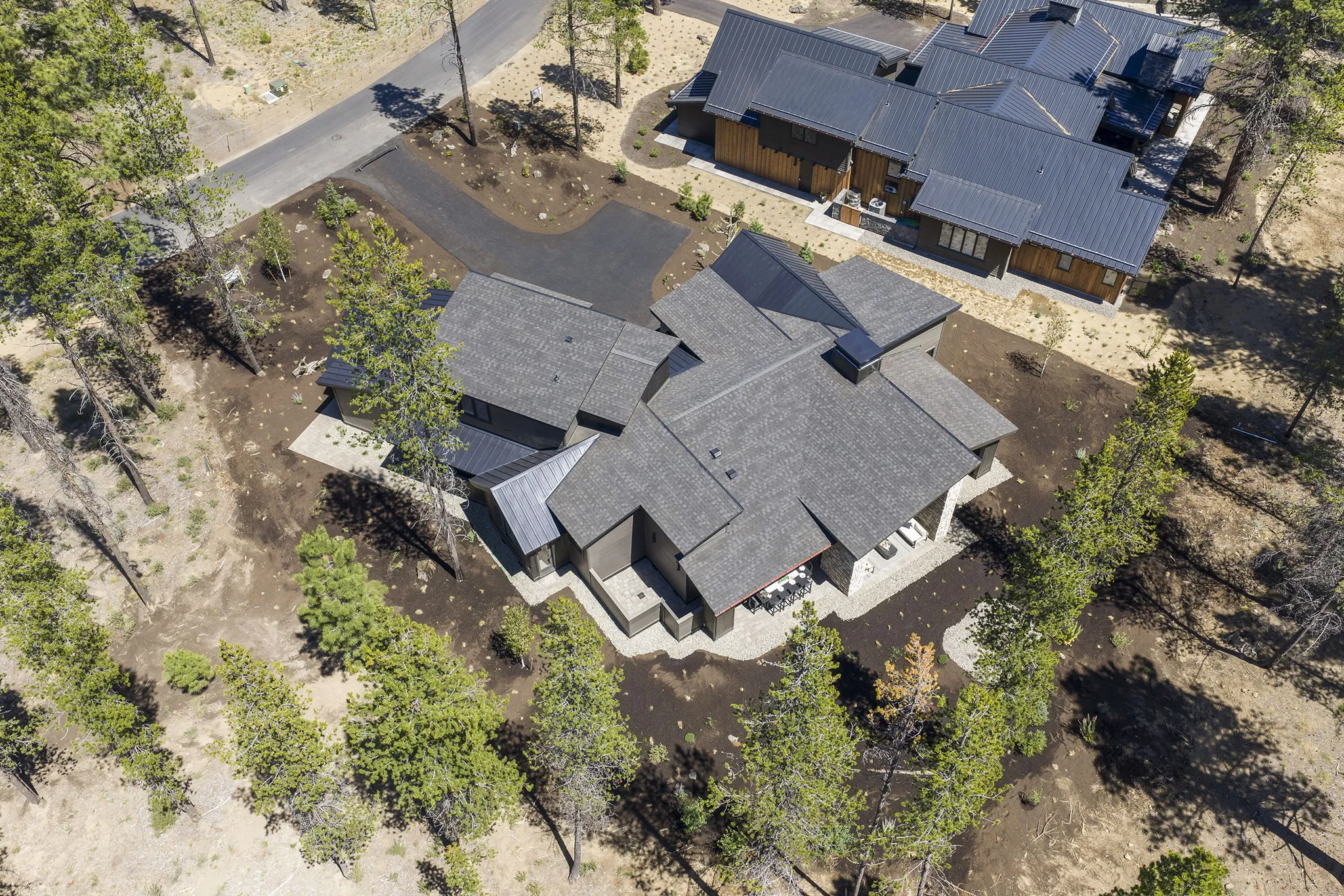
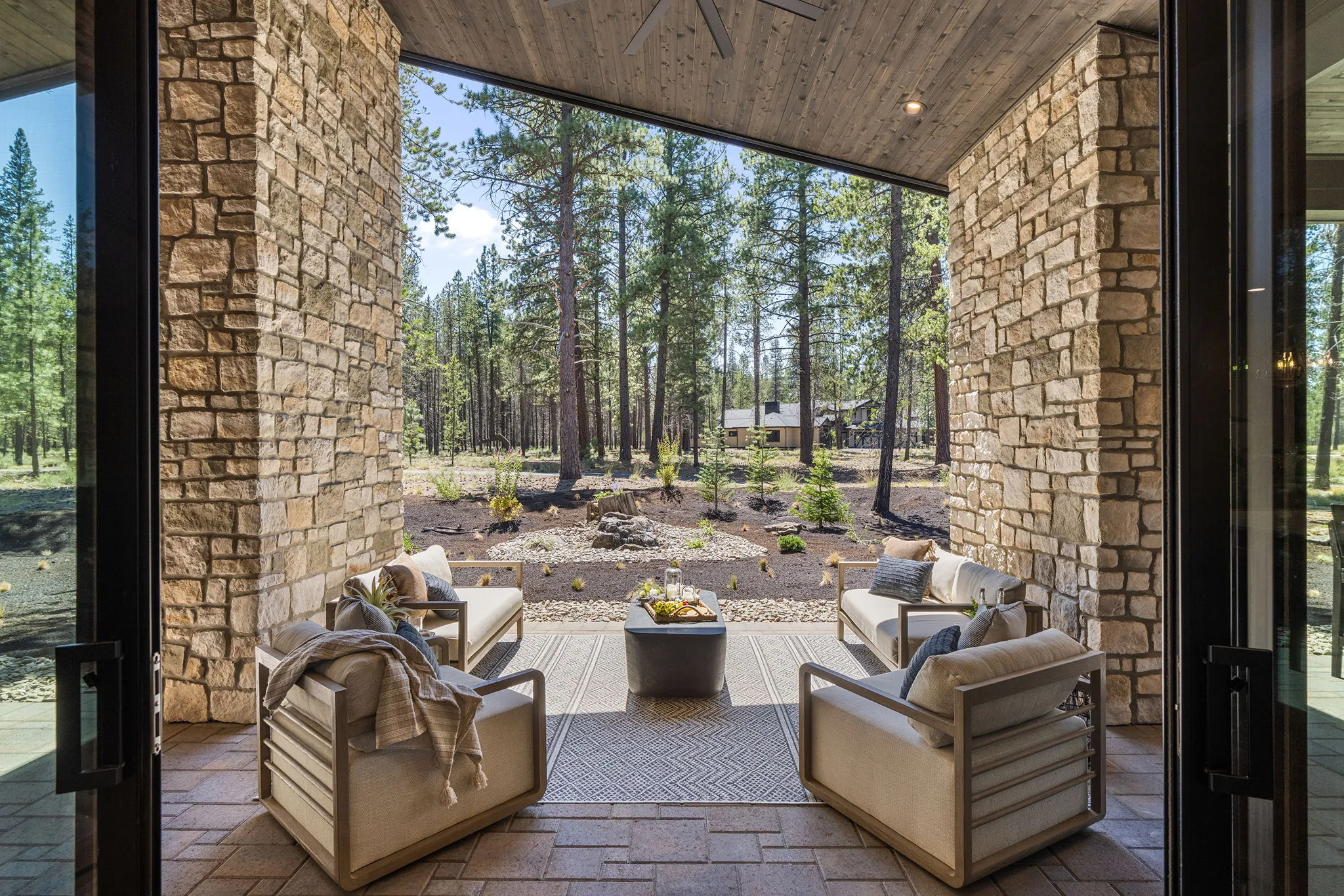
Central Oregon lots often look simple and turn out not to be. Shallow lava rock can change excavation and foundation costs. Slope affects foundation design, driveway grade, and drainage. Mature ponderosa pines and junipers add character and shade, but their placement shapes where the house, drainfield, and defensible space can go.
This is the part of the budget that depends most on the land itself, which is why it’s worth an early site visit with a builder before you commit.
Orientation, views, and how the home will fit
A lot’s value to you comes down to how a home will sit on it. Walk the site at different times of day. Note where the Cascade views are, where the afternoon sun lands, which way winter wind comes from, and where the neighbors’ windows face.
Then check fit on paper. Setbacks, lot coverage limits, and height limits set by zoning define the envelope your home has to sit within. A narrow or oddly shaped lot may call for a specific plan width or a garage on a different side. At Select, that’s where plan design comes in: you can start from one of our proven floor plans and modify it to fit the lot, from minor adjustments up to a full transformation, or design fully custom.
Wildfire and defensible space
Much of Central Oregon sits in or near the wildland-urban interface. In 2025, Oregon lawmakers passed Senate Bill 83, which repealed the statewide wildfire hazard map along with the building code and defensible space requirements tied to it, and directed state agencies to create model codes that local governments can choose to adopt. Details of the bill are on the Oregon Legislature’s SB 83 page.
A repealed mandate doesn’t change the fire behavior of a juniper-covered lot. Look at vegetation density, the slope below the building site, and access for emergency vehicles, and ask your insurance agent about coverage before you buy. The Oregon State Fire Marshal publishes defensible space guidance that’s useful whether or not your jurisdiction requires it.
Community rules: CC&Rs and design review
Many Central Oregon lots sit in planned or resort communities with their own covenants, conditions, and restrictions (CC&Rs) and a design review committee. These can set minimum home sizes, roof pitches, exterior materials, colors, building envelopes, and landscaping rules, and design review adds time to the schedule. Get the CC&Rs and design guidelines early and read them against the home you have in mind. If you’re looking in Caldera Springs, see our Caldera Springs homesites and plans.
Your building lot checklist
What to do next
-
Look up the parcel in DIAL and note its zoning and permit history.
-
Ask the seller for any site evaluation, well log, lot of record documentation, title report, and CC&Rs.
-
Build these checks into your offer’s due diligence period.
-
Walk the lot with a builder before contingencies expire.
If you haven’t found land yet, our guide to finding a lot in Bend covers where lots come from, and a licensed real estate agent on our team can help you search. For a closer look at permits once you own the land, see our guide to custom home permitting in Bend.
How Select looks at a lot
During a complimentary design consultation, we look at a lot’s potential the way this checklist does: orientation, views, topography, sun, and access, then how our floor plans could fit and what the site is likely to need. We talk through realistic cost and timeline ranges early, so the number you plan around reflects your land. When you’re ready, the next step is building on your own land with one team from design through construction.
Already own a lot, or have one under contract? Request a complimentary design consultation or call 541.527.7462.
Frequently asked questions
Can I build on any lot zoned residential in Deschutes County? Not automatically. The parcel generally needs to be a legal lot of record, and if it will use septic, it needs an approved site evaluation before the county will issue building permits. Zoning, setbacks, and any community CC&Rs also limit what you can build.
Is an old septic site evaluation still good? Often, but not always. Deschutes County generally relies on evaluations less than 15 years old, and it still considers whether the evaluation is complete and whether newer rules or site changes affect it. Confirm it matches the parcel today.
Do I need a water right to drill a well for my home? For household use, usually not. Oregon exempts single or group domestic groundwater use up to 15,000 gallons per day from the water right permit process. Whether a well can find enough water is a separate question; neighboring well logs are the best early indicator.
How early should I involve a builder? Before your due diligence period ends. A builder can spot site costs, plan fit issues, and access problems that change whether the lot makes sense for the home you want.
This article is general information, not legal or real estate advice. Requirements vary by lot, jurisdiction, and project, and rules change. Confirm current requirements with the City of Bend, Deschutes County Community Development, or your local building department, and talk with the appropriate professionals before you buy.
OR CCB# 234456